Gut Health Test (Small)
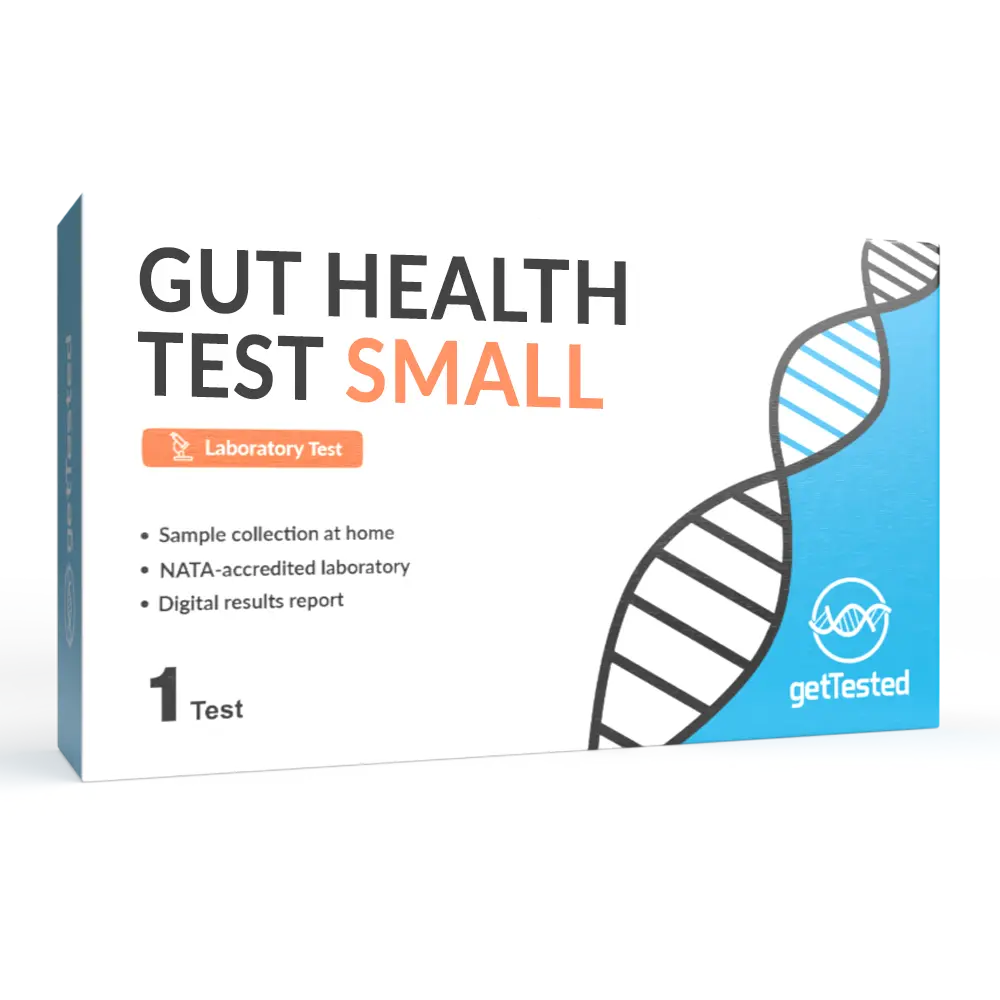
A foundational look at your gut microbiome at home. Stool test of beneficial and opportunistic bacteria, yeast and parasites, in a NATA-accredited AU lab.
Product details: AUD 339 — InStock — SKU 2003 — GetTested
About this test – Gut Health Test (Small)
When is this test relevant?
Bloating or gas
Changes in bowel habits (diarrhea, constipation, or both)
Ongoing digestive discomfort
Suspected imbalance in gut bacteria or yeast
Interest in assessing gut health at a foundational level
As a first step before more advanced gut testing
How it works
Collect a stool sample at home using the test kit
Send your sample to the laboratory using the prepaid return envelope
Your sample is analysed using culture, microscopy, and PCR-based methods
Receive your digital results within 5 days
You can also use our AI-based chat to help interpret your results
Key information
Sample type: Stool
Method: Culture, microscopy, and PCR
Markers: Bacteria (beneficial and opportunistic), yeasts, selected parasites, stool characteristics, and sensitivity testing
Focus: Gut microbiome overview and microbial balance
Turnaround time: 5 days from when the lab receives your sample
Results: Delivered digitally
Laboratory: NATA-accredited laboratory (ISO 15189)
Shipping: Return shipping included
Before you test
For best results, avoid antibiotics, antifungals, and probiotics prior to sample collection, as these may affect microbial levels.
Avoid collecting samples during or immediately after acute gastrointestinal illness, unless otherwise advised.
Detailed preparation instructions are included in the kit.
Accredited Laboratory
Your sample is analysed at a NATA-accredited laboratory, using validated culture, microscopy, and PCR methods. This ensures reliable detection of a range of microorganisms and stool characteristics.
Biomarkers included – Gut Health Test (Small)
- Enterococcus species: Good Gut Bacteria — Enterococcus species are bacteria that can naturally be found in the human gut as part of the normal intestinal microbiome. In balanced levels, they may contribute to microbial diversity and support the overall gut environment. However, higher levels may suggest a shift in microbial balance, especially when seen together with digestive symptoms or other bacterial changes. Enterococcus results shou
- Bifidobacterium breve: Good Gut Bacteria — Bifidobacterium breve is a beneficial gut bacterium involved in fibre fermentation and short chain fatty acid production. It helps support a balanced gut environment and may contribute to normal digestion and immune function. Lower levels may suggest reduced beneficial fermentation and can be relevant in patterns involving bloating, irregular bowel habits, food related discomfort or lower microbia
- Lactobacillus casei: Good Gut Bacteria — Lactobacillus casei is a beneficial gut bacterium involved in lactic acid production and microbial balance. It can support digestion by helping maintain a gut environment that discourages overgrowth of less favourable organisms. Lower levels may be relevant when assessing bloating, loose stools, digestive discomfort, reduced tolerance to certain foods or general gut imbalance.
- Bifidobacterium longum: Good Gut Bacteria — Bifidobacterium longum is a beneficial gut bacterium that helps process dietary fibres and supports a stable intestinal environment. It is often discussed in relation to gut barrier function, immune balance and the breakdown of complex carbohydrates. Lower levels may be relevant when symptoms such as bloating, digestive discomfort, irregular stools or sensitivity to certain foods are present.
- Lactobacillus plantarum: Good Gut Bacteria — Lactobacillus plantarum is a beneficial gut bacterium known for producing lactic acid and helping support the intestinal barrier. It is also discussed in relation to microbial balance and the handling of digestive irritation. Lower levels may be relevant when symptoms such as bloating, abdominal discomfort, loose stools, food related reactions or ongoing gut irritation are present.
- Escherichia coli: Good Gut Bacteria — Escherichia coli (E. coli) is a bacterium commonly found in the intestines of humans and animals. Many strains are a normal part of the gut microbiome and can contribute to microbial balance, digestion and vitamin production, including vitamin K. However, some strains of E. coli can be harmful and may be associated with gastrointestinal infection. In a stool profile, E. coli should be interpreted
- Lactobacillus acidophilus: Good Gut Bacteria — Lactobacillus acidophilus is a beneficial lactic acid producing bacterium found in the gut and other mucosal areas. It helps support a balanced gut environment by producing lactic acid, which can make conditions less favourable for less desirable microbes. Lower levels may be relevant in patterns involving digestive discomfort, bloating, irregular stools or reduced microbial balance.
- Lactobacillus paracasei: Good Gut Bacteria — Lactobacillus paracasei is a beneficial lactic acid producing bacterium that can support gut barrier function and microbial balance. It is often associated with immune and digestive support, especially in relation to maintaining a stable intestinal environment. Lower levels may be relevant in patterns involving recurring digestive irritation, bloating, irregular bowel habits or reduced beneficial
- Lactobacillus rhamnosus: Good Gut Bacteria — Lactobacillus rhamnosus is a beneficial lactic acid producing bacterium that supports microbial balance, gut barrier function and immune related activity in the gut. It is one of the more commonly discussed Lactobacillus species in relation to digestive resilience. Lower levels may be relevant in patterns involving loose stools, bloating, digestive discomfort, recurring gut irritation or reduced m
- Bifidobacterium bifidum: Good Gut Bacteria — Bifidobacterium bifidum is a beneficial gut bacterium that helps break down complex carbohydrates and supports the intestinal barrier. It is also linked to immune regulation and protection against less desirable microbes in the gut. Lower levels may be relevant when assessing digestive imbalance, reduced gut barrier support, bloating, loose stools or recurring gut irritation.
- Bifidobacterium pseudocatenulatum: Good Gut Bacteria — Bifidobacterium pseudocatenulatum is a beneficial gut bacterium involved in fermenting dietary fibres and supporting short chain fatty acid production. It may help maintain microbial balance and support the gut barrier. Lower levels may suggest reduced beneficial bacterial activity and can be relevant in patterns involving bloating, loose stools, digestive irritation or reduced fibre fermentation.
- Bifidobacterium animalis: Good Gut Bacteria — Bifidobacterium animalis is a beneficial gut bacterium often associated with microbial balance and digestive support. It can help ferment dietary fibres and contribute to the production of short chain fatty acids, which support the gut environment. Lower levels may suggest reduced beneficial bacterial activity and can be relevant in patterns involving bloating, irregular stools, digestive discomfo
- Aeromonas hydrophila: Imbalance Related Gut Bacteria — Aeromonas hydrophila is a bacterium that can be found in water, soil and contaminated food, and may sometimes be detected in the gastrointestinal tract. Higher levels or a positive finding may be associated with digestive irritation, loose stools, diarrhoea, abdominal discomfort, nausea or changes in stool quality. Results should be interpreted together with symptoms, exposure history and the wide
- Pseudomonas aeruginosa: Imbalance Related Gut Bacteria — Pseudomonas aeruginosa is a bacterium that may be found in the gut as a minor or temporary member of the microbiome. Higher levels can suggest a shift in gut bacterial balance and may be more relevant when the gut environment is already irritated or disrupted. This can be seen together with symptoms such as loose stools, bloating, abdominal discomfort, increased gas or ongoing digestive irritation
- Citrobacter freundii complex: Imbalance Related Gut Bacteria — Citrobacter freundii complex refers to a group of bacteria that can be present in the gut in low amounts. In balanced levels, they may be part of the wider intestinal microbiome, but higher levels can suggest a shift in gut bacterial balance. This may be relevant when symptoms such as bloating, loose stools, abdominal discomfort, increased gas or recurring digestive irritation are present. Higher
- Streptococcus agalactiae: Imbalance Related Gut Bacteria — Streptococcus agalactiae is a bacterium that can be found in the gut microbiome. In low amounts, it may be present without causing problems, but higher levels can suggest a change in microbial balance. This may be relevant when assessing digestive symptoms such as bloating, irregular stools, abdominal discomfort or signs of gut irritation. The result is most useful when considered together with th
- Klebsiella pneumoniae complex: Imbalance Related Gut Bacteria — Klebsiella pneumoniae complex refers to a group of bacteria that can live in the gut but may become more relevant when present at higher levels. Increased levels may suggest a shift in microbial balance and can be seen in patterns of dysbiosis, especially when other imbalance related bacteria are also present. This may be relevant when symptoms such as bloating, gas, loose stools, abdominal discom
- Enterococcus faecium: Imbalance Related Gut Bacteria — Enterococcus faecium is a bacterium that can be found in the human gut as part of the intestinal microbiome. In balanced amounts, it may be present without causing problems and can contribute to microbial diversity. Higher levels may suggest a shift in gut bacterial balance, especially when seen together with other imbalance related bacteria or digestive symptoms. This marker can be relevant when
- Aeromonas species: Pathogenic Bacteria — Aeromonas species are bacteria that can be found in water, soil, food and sometimes in the gastrointestinal tract. Some species may be associated with digestive irritation, particularly after exposure to contaminated water or food. Higher or detected levels may be relevant when symptoms such as watery diarrhoea, abdominal discomfort, nausea, fever or changes in stool consistency are present. Aerom
- Yersinia species: Pathogenic Bacteria — Yersinia species are bacteria that can be detected in stool and may be associated with gastrointestinal infection or irritation. Exposure can occur through contaminated food or water, especially undercooked pork, unpasteurised dairy products or contact with contaminated environments. A positive finding may be relevant when symptoms such as diarrhoea, abdominal pain, fever, nausea, reduced appetite
- Shigella species: Pathogenic Bacteria — Shigella species are bacteria that can affect the intestinal tract and are usually spread through faecal contamination, contaminated food or water, or close contact. A positive finding may be associated with diarrhoea, abdominal cramps, fever, mucus in stool, blood in stool or urgent bowel movements. Shigella results should be interpreted together with symptoms, exposure history and the wider gast
- Salmonella species: Pathogenic Bacteria — Salmonella species are bacteria that can be detected in stool and are commonly linked to contaminated food, water, animals or faecal exposure. A positive finding may be associated with diarrhoea, abdominal cramps, nausea, vomiting, fever, reduced appetite or poor general condition. Salmonella can also be relevant for hygiene and transmission risk, so results should be interpreted together with sym
- Campylobacter species: Pathogenic Bacteria — Campylobacter species are bacteria that can be found in the intestinal tract and are often linked to contaminated food, water, animals or faecal exposure. A positive finding may be associated with diarrhoea, abdominal cramps, nausea, fever, mucus in stool or general digestive upset. Campylobacter results should be interpreted together with symptoms, possible exposure sources and other gastrointest
- Candida parapsilosis: Yeasts — Candida parapsilosis is a yeast species that can be part of the normal human microbiota, particularly on the skin and in the gastrointestinal tract. While often harmless in healthy individuals, it can become opportunistic and cause infections, especially in hospitalized or immunocompromised patients. It is commonly associated with catheter-related infections, wound infections, and sometimes gastro
- Candida albicans: Yeasts — Candida albicans is a type of yeast that can affect different parts of the body, most commonly causing vaginal yeast infections and gut overgrowth. Vaginal infections lead to itching, discomfort, and discharge, often resulting from an imbalance in natural flora. In the gut, overgrowth of Candida albicans can disrupt digestion, leading to bloating and changes in bowel habits. Factors such as diet,
- Blastocystis hominis: Parasites — Blastocystis hominis is a common protozoan parasite found in the intestines and often detected in individuals experiencing gastrointestinal symptoms. While its role in causing disease remains debated, it is frequently linked to various digestive issues and is commonly identified in stool examinations around the world.
- Dientamoeba fragilis: Parasites — Dientamoeba fragilis is a single-celled parasite that resides in the human gastrointestinal tract. It is linked to dientamoebiasis, a condition that may cause various digestive symptoms. Its exact mode of transmission and role in disease remain under investigation.
- Cryptosporidium species: Parasites — Cryptosporidium spp. are a group of protozoan parasites that cause cryptosporidiosis, an infectious gastrointestinal disease. Known for their resilience in diverse environments, especially in water, these parasites play a key role in outbreaks of diarrheal illness affecting both humans and animals.
- Giardia intestinalis: Parasites — Giardia intestinalis is a microscopic intestinal parasite that can be found in the digestive tract. It is usually spread through contaminated water, food, surfaces or faecal exposure. Higher levels or a positive finding may be associated with loose or watery stools, gas, bloating, mucus in stool, abdominal discomfort, reduced appetite or recurring digestive upset. Giardia results should be interpr
- Entamoeba histolytica: Parasites — Entamoeba histolytica is a protozoan parasite responsible for amoebiasis, an infection that can range from mild or asymptomatic to severe forms, including dysentery and liver abscesses. It is a major public health concern in regions with poor sanitation, particularly in tropical and subtropical countries.
- Steatocrit: Digestive Function Markers — Steatocrit is a stool marker that reflects the amount of fat present in the stool. Higher levels may suggest that fat is not being fully digested or absorbed. This can be relevant when symptoms such as greasy, pale, floating or difficult to flush stools, bloating, diarrhoea, abdominal discomfort, weight changes or signs of poor absorption are present. Steatocrit is often interpreted together with
- pH value: Gut Environment Markers — The stool pH value is a measure that indicates the acidity or alkalinity in the intestines. It reflects the balance of metabolic processes such as fermentation and protein breakdown. A low stool pH often suggests increased fermentation of complex sugars by intestinal bacteria, which can acidify the stool. Conversely, a high stool pH may result from excessive protein metabolism, leading to the prod
- Fecal occult blood: Faecal Occult Blood — Fecal occult blood (FOB) is a measure that detects hidden blood in the stool, which is not visible to the naked eye. The presence of FOB can be an important indicator of internal gastrointestinal bleeding, often occurring without obvious symptoms. FOB testing is a non-invasive method used to help identify potential underlying medical conditions affecting the digestive tract.
How to prepare – Gut Health Test (Small)
To ensure your comprehensive stool analysis reflects your natural baseline, stop antibiotics 4 weeks before testing. Probiotics and digestive enzymes should be stopped 2 weeks prior. Always consult your doctor before pausing prescribed medications.
Frequently asked questions – Gut Health Test (Small)
How fast will I receive my results?
Our test provides digital results within 5 business days of the sample arriving at our laboratory.
Will my sample degrade in the mail?
Your kit includes specialized transport media designed to stabilize the specimen. This ensures that the microbes and pathogens remain viable for analysis throughout the shipping process, regardless of transit temperatures or duration.
Do I need to stop supplements before the test?
To ensure your comprehensive stool analysis reflects your natural baseline, stop antibiotics 4 weeks before testing. Probiotics and digestive enzymes should be stopped 2 weeks prior. Always consult your doctor before pausing prescribed medications.
Customer reviews – Gut Health Test (Small)
4.6/5 (5)
- 5/5 — Extremely fast turnaround time compared to other labs I've used. Easy instructions too.
- 4/5 — Everything arrived quickly and was easy to register.
- 5/5 — The sensitivity analysis for treatment options was super helpful.
- 5/5 — Actually got my results in under a week!
- 4/5 — Good kit, but the collection process is a bit gross. Results were very clear though.