Intestinal Worm Test
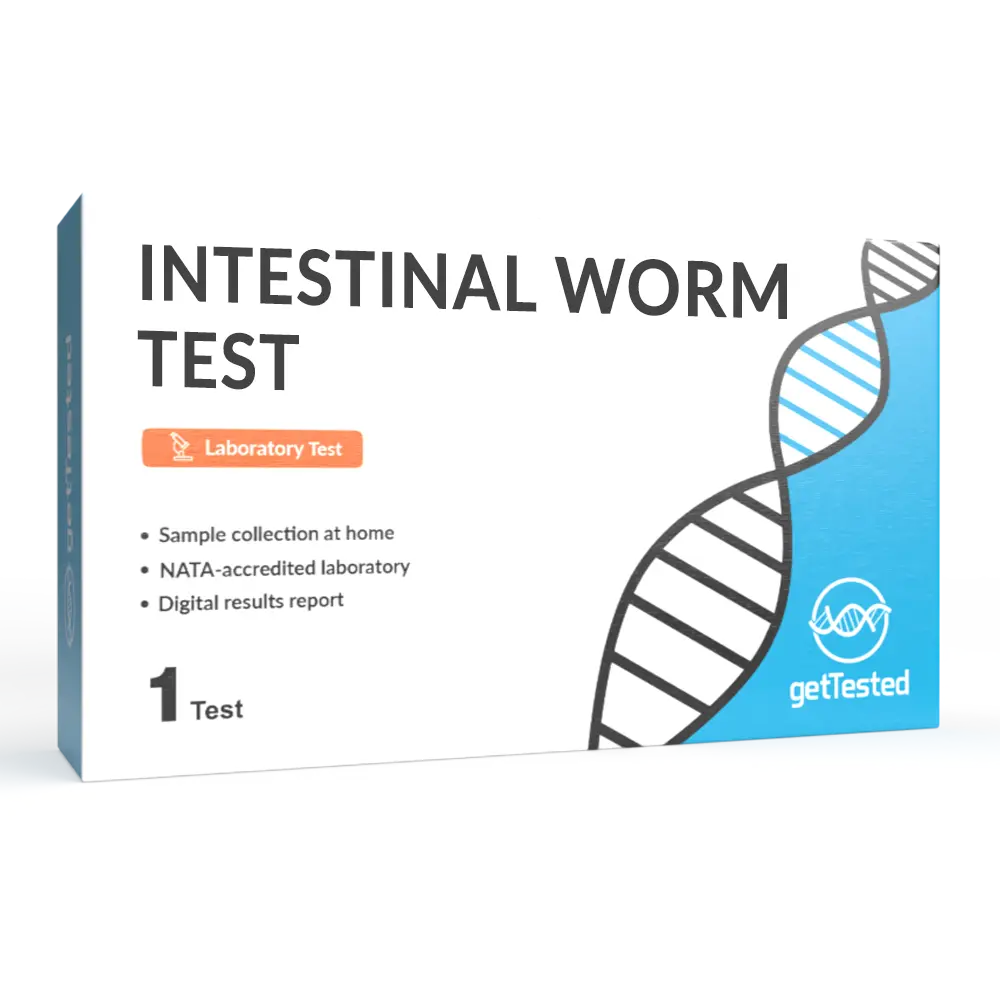
Reliable at-home parasite test using PCR DNA technology. Detects 9 species including hookworm, roundworm, and pinworm. Get lab-certified results in 3-5 days.
Product details: AUD 159 — InStock — SKU 2028 — GetTested
About this test – Intestinal Worm Test
Why test for intestinal worms?
Intestinal worms can be acquired through contaminated food or water, travel, or environmental exposure. They may not always cause clear symptoms, but in some cases can be associated with gastrointestinal discomfort, changes in bowel habits, fatigue, or unexplained symptoms following travel or exposure.
This test may be relevant when exploring:
Symptoms following travel
Potential exposure through food, water, or the environment
Ongoing or unexplained gastrointestinal issues
Suspicion of intestinal worms
This test focuses on larger intestinal worms (helminths). For broader screening of microscopic parasites or bacterial infections, the Parasite & Infection Test may be more suitable.
How it works
Collect a stool sample at home
Send your sample to the laboratory using the prepaid return envelope
Your sample is analysed at an accredited laboratory
Receive your digital results within 3–5 days
You can also use our AI-based chat to help interpret your results.
Key information
Sample type: Stool
Turnaround time: 3–5 days from when the lab receives your sample
Results: Delivered digitally
Laboratory: Accredited laboratory
Shipping: Return shipping included
Accredited Laboratory
Your sample is analysed at a NATA-accredited laboratory in Australia, operating in accordance with ISO 15189 standards for medical testing. This ensures that all analyses are performed using validated methods and strict quality control procedures to provide accurate and reliable results.
Biomarkers included – Intestinal Worm Test
- Enterobius vermicularis (pinworm): Roundworms, Pinworms and Hookworms — Enterobius vermicularis is a pinworm that can be detected in stool. Pinworm infection is usually spread through microscopic eggs on hands, surfaces, bedding, clothing or contaminated surroundings. It most commonly affects the lower intestine and the area around the anus. A positive finding may be relevant when symptoms such as anal itching, disturbed sleep, irritability, mild abdominal discomfort
- Ascaris lumbricoides (roundworm): Roundworms, Pinworms and Hookworms — Ascaris lumbricoides is an intestinal roundworm that can be detected in stool. Infection usually occurs after swallowing eggs from contaminated food, water, soil or surfaces. In the gut, roundworms can affect digestion and nutrient absorption, particularly if the infection becomes more established. A positive finding may be relevant when symptoms such as abdominal discomfort, bloating, diarrhoea,
- Trichuris trichiura (whipworm): Roundworms, Pinworms and Hookworms — Trichuris trichiura is an intestinal whipworm that can be detected in stool. Infection usually occurs after swallowing eggs from faecally contaminated food, water, soil or hands. Whipworms mainly affect the large intestine, where they can irritate the intestinal lining. A positive finding may be relevant when symptoms such as abdominal pain, diarrhoea, mucus in stool, blood in stool, straining, fa
- Strongyloides species (threadworm): Roundworms, Pinworms and Hookworms — Threadworms (Strongyloides stercoralis) are tiny intestinal parasites that cause strongyloidiasis. They can be asymptomatic or lead to a variety of symptoms, including abdominal pain, diarrhea, and, in severe cases, malabsorption. Transmission occurs through skin contact with contaminated soil. These worms are notable for their ability to reproduce within the host, which can result in persistent,
- Necator americanus (hookworm): Roundworms, Pinworms and Hookworms — New World hookworms (Necator americanus) are a type of parasitic worm commonly found in the Americas. These parasites attach to the intestinal walls of their hosts, causing chronic blood loss, anemia, and protein deficiency. The larvae can penetrate the skin from contaminated soil, putting individuals who come into contact with such environments at risk of infection.
- Hymenolepis species (tapeworm): Tapeworms — Hymenolepis species are tapeworms that can be detected in stool. Exposure may occur through swallowing tapeworm eggs from contaminated food, water, hands or surfaces. Some species may also involve insects or other intermediate hosts. Tapeworms live in the intestine and can interfere with normal digestive function. A positive finding may be relevant when symptoms such as abdominal discomfort, diarr
- Taenia species (tapeworm): Tapeworms — Taenia species are intestinal tapeworms that can be detected in stool. Exposure usually occurs through eating raw or undercooked meat that contains tapeworm larval stages. Adult tapeworms can live in the intestine and may sometimes cause mild or non specific digestive symptoms. A positive finding may be relevant when symptoms such as abdominal discomfort, appetite changes, nausea, weight changes,
- Enterocytozoon species (microsporidia): Microsporidia — Enterocytozoon species are microscopic parasites belonging to a group called microsporidia. They can infect intestinal cells and may be detected in stool. Exposure may occur through contaminated water, food, faecal contact or environments where infectious spores are present. A positive finding may be relevant when symptoms such as recurring diarrhoea, loose or watery stools, abdominal discomfort,
How to prepare – Intestinal Worm Test
Wait 48 hours after taking anti-diarrheal medications, laxatives, or antacids. No fasting required.
Frequently asked questions – Intestinal Worm Test
How accurate is this test compared to a doctor's test?
PCR (Polymerase Chain Reaction) technology detects the DNA of parasites. This is generally more accurate than traditional microscopy because it can find evidence of parasites even if they are not actively 'shedding' eggs at the moment the sample is taken.
Do I need to change my diet or stop supplements before the test?
No, you do not need to fast. However, it is generally recommended to wait 48 hours after taking anti-diarrheal medications, laxatives, or antacids before collecting your sample.
What are the most common symptoms of a parasite infection?
Common indicators include persistent bloating, unexplained weight loss, anal itching (especially at night), fatigue, and nutrient deficiencies like low iron (anemia). These are frequently cited as common hookworm symptoms in humans.
Customer reviews – Intestinal Worm Test
4.6/5 (5)
- 4/5 — Fast delivery and clear results.
- 5/5 — Glad I did this after my trip to Southeast Asia. The results came back in 4 days and were very easy to understand.
- 4/5 — The kit was straightforward and easy to follow. Collecting a stool sample is a bit uncomfortable, even with the provided gloves and tools, but overall the process was manageable. The DNA results felt more detailed and reliable than standard doctor’s tests.
- 5/5 — Really simple instructions and the kit arrived quickly.
- 5/5 — Much easier than trying to get an appointment with a specialist.