Parasite Test
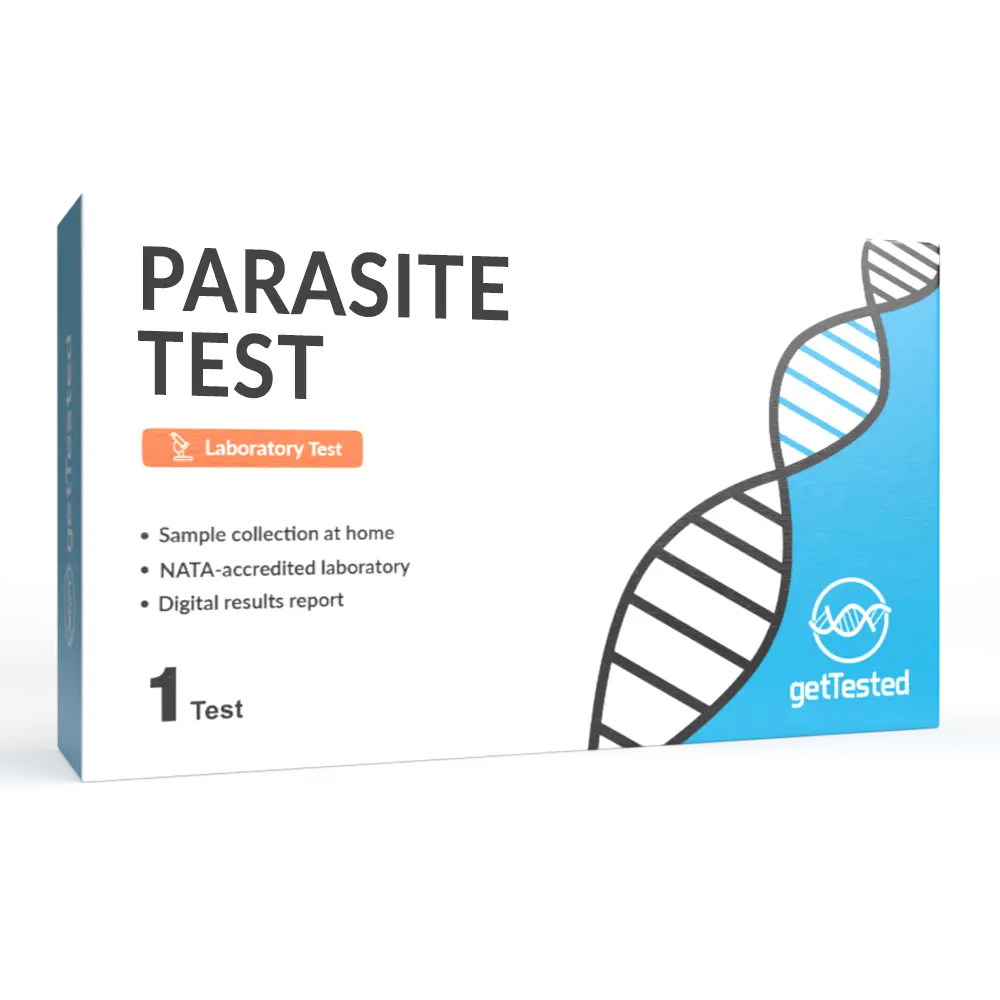
Gut symptoms after travel or suspected food poisoning? At-home PCR stool test for parasites and bacterial infections, NATA-accredited lab, results in 24 hours.
Product details: AUD 109 — InStock — SKU 2002 — GetTested
About this test – Parasite Test
What this test measures
Parasites:
Giardia intestinalis, Cryptosporidium, Dientamoeba fragilis, Entamoeba histolytica, Blastocystis hominis
Bacterial infections:
Campylobacter spp., Salmonella spp., Shigella spp., Yersinia enterocolitica, Aeromonas spp.
Why test for parasites and bacterial infections?
Intestinal parasites and bacterial infections are commonly acquired through contaminated food or water, travel, or environmental exposure.
In some cases, they may cause acute symptoms such as diarrhoea, stomach pain, or nausea, while in other cases symptoms may be milder or persist over time.
This test may be relevant when exploring:
Diarrhoea or loose stools
Stomach pain, bloating, or discomfort
Symptoms following travel
Suspected foodborne illness
Ongoing or unexplained gastrointestinal issues
About the analysis method
This test uses DNA-based multiplex PCR, which detects genetic material from parasites and bacteria, allowing for targeted identification of the organisms included in the test panel.
How it works
Collect a stool sample at home
Send your sample to the laboratory using the prepaid return envelope
Your sample is analysed using DNA-based multiplex PCR
Receive your digital results within 24 hours
You can also use our AI-based chat to help interpret your results.
Key information
Sample type: Stool
Turnaround time: Within 24 hours from when the lab receives your sample
Results: Delivered digitally
Laboratory: Accredited laboratory
Shipping: Return shipping included
Accredited Laboratory
Your sample is analysed at a NATA-accredited laboratory in Australia, operating in accordance with ISO 15189 standards for medical testing. This ensures that all analyses are performed using validated methods and strict quality control procedures to provide accurate and reliable results.
Biomarkers included – Parasite Test
- Dientamoeba fragilis: Parasites — Dientamoeba fragilis is a single-celled parasite that resides in the human gastrointestinal tract. It is linked to dientamoebiasis, a condition that may cause various digestive symptoms. Its exact mode of transmission and role in disease remain under investigation.
- Cryptosporidium species: Parasites — Cryptosporidium spp. are a group of protozoan parasites that cause cryptosporidiosis, an infectious gastrointestinal disease. Known for their resilience in diverse environments, especially in water, these parasites play a key role in outbreaks of diarrheal illness affecting both humans and animals.
- Giardia intestinalis: Parasites — Giardia intestinalis is a microscopic intestinal parasite that can be found in the digestive tract. It is usually spread through contaminated water, food, surfaces or faecal exposure. Higher levels or a positive finding may be associated with loose or watery stools, gas, bloating, mucus in stool, abdominal discomfort, reduced appetite or recurring digestive upset. Giardia results should be interpr
- Entamoeba histolytica: Parasites — Entamoeba histolytica is a protozoan parasite responsible for amoebiasis, an infection that can range from mild or asymptomatic to severe forms, including dysentery and liver abscesses. It is a major public health concern in regions with poor sanitation, particularly in tropical and subtropical countries.
- Blastocystis hominis: Parasites — Blastocystis hominis is a common protozoan parasite found in the intestines and often detected in individuals experiencing gastrointestinal symptoms. While its role in causing disease remains debated, it is frequently linked to various digestive issues and is commonly identified in stool examinations around the world.
- Aeromonas hydrophila: Bacterias — Aeromonas hydrophila is a bacterium that can be found in water, soil and contaminated food, and may sometimes be detected in the gastrointestinal tract. Higher levels or a positive finding may be associated with digestive irritation, loose stools, diarrhoea, abdominal discomfort, nausea or changes in stool quality. Results should be interpreted together with symptoms, exposure history and the wide
- Yersinia enterocolitica: Bacterias — Yersinia enterocolitica is a bacterium that can be detected in stool and may be linked to contaminated food, water or faecal exposure. A positive finding may be associated with diarrhoea, abdominal discomfort, fever, nausea, reduced appetite or symptoms that can sometimes mimic lower abdominal irritation. Results should be interpreted together with symptoms, possible exposure history and other gut
- Shigella species: Bacterias — Shigella species are bacteria that can affect the intestinal tract and are usually spread through faecal contamination, contaminated food or water, or close contact. A positive finding may be associated with diarrhoea, abdominal cramps, fever, mucus in stool, blood in stool or urgent bowel movements. Shigella results should be interpreted together with symptoms, exposure history and the wider gast
- Salmonella species: Bacterias — Salmonella species are bacteria that can be detected in stool and are commonly linked to contaminated food, water, animals or faecal exposure. A positive finding may be associated with diarrhoea, abdominal cramps, nausea, vomiting, fever, reduced appetite or poor general condition. Salmonella can also be relevant for hygiene and transmission risk, so results should be interpreted together with sym
- Campylobacter species: Bacterias — Campylobacter species are bacteria that can be found in the intestinal tract and are often linked to contaminated food, water, animals or faecal exposure. A positive finding may be associated with diarrhoea, abdominal cramps, nausea, fever, mucus in stool or general digestive upset. Campylobacter results should be interpreted together with symptoms, possible exposure sources and other gastrointest
How to prepare – Parasite Test
Avoid taking antibiotics, antiparasitics, or antifungal medications for at least two weeks prior to sample collection unless otherwise instructed by your physician. There are no specific dietary restrictions required for this test.
Frequently asked questions – Parasite Test
How does PCR testing differ from traditional microscopy?
Multiplex PCR is significantly more sensitive. While traditional microscopy requires seeing an intact parasite, PCR detects DNA fragments, meaning it can find pathogens even if they are not shedding or are no longer alive in the sample.
How long does it take to get results?
Results are delivered digitally to your secure portal within 24 hours of the laboratory receiving your sample.
Should I stop taking antibiotics before the test?
It is generally recommended to wait at least 2 weeks after finishing a course of antibiotics before testing to ensure the most accurate representation of your gut health, unless otherwise directed by a healthcare provider.
Will the sample stay stable during shipping?
The kit includes a stabilization buffer in the collection tube which preserves the DNA at room temperature, preventing degradation during the shipping process.
Customer reviews – Parasite Test
4.6/5 (5)
- 4/5 — Very fast turnaround time once received by the lab. Wish the kit arrived a day sooner, but the testing itself is great.
- 4/5 — Much more comprehensive than the tests my GP offered.
- 5/5 — Incredibly fast results!
- 5/5 — Finally got some answers for my travel-related issues.
- 5/5 — Instructions were easy to follow and the portal works well. Process was smooth throughout.