Heavy Metal Test
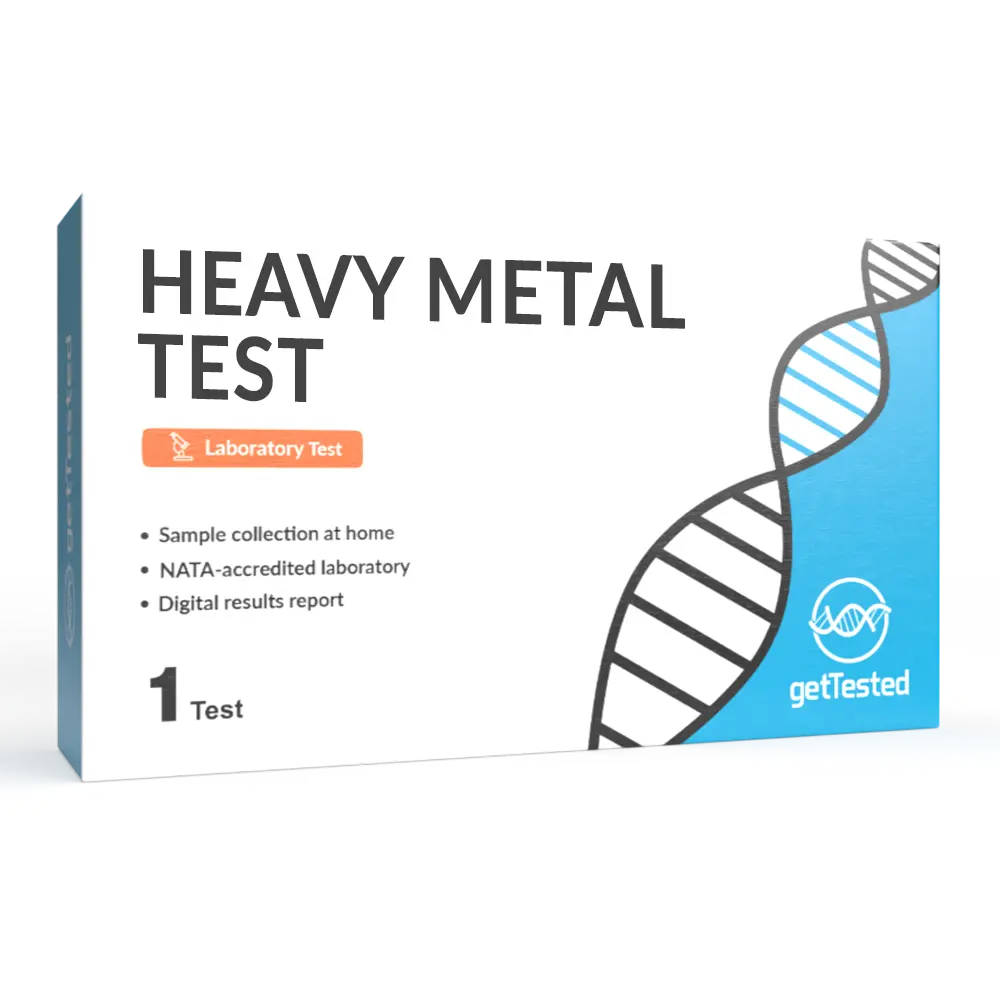
Check your recent heavy-metal exposure at home. Urine test of 14 toxic metals including mercury, lead and arsenic, in a NATA-accredited Australian lab.
Product details: AUD 339 — InStock — SKU 5020 — GetTested
About this test – Heavy Metal Test
Why test for heavy metals?
Exposure to heavy metals can occur through everyday sources such as food, drinking water, air pollution, or occupational environments.
For example, metals such as lead, nickel, and aluminum may be found in industrial settings, paints, or consumer products, while arsenic and cadmium can occur in certain foods and contaminated water.
This test may be relevant when exploring:
Suspected exposure through work or environment
Contact with chemicals, metals, or industrial materials
Consumption of contaminated food or water
Ongoing or repeated exposure over time
How it works
Collect a urine sample at home
Send your sample to the laboratory using the prepaid return envelope
Your sample is analysed at an accredited laboratory
Receive your digital results within 7 days
You can also use our AI-based chat to help interpret your results.
Key information
Sample type: Urine
Turnaround time: 7 days from when the lab receives your sample
Results: Delivered digitally
Laboratory: Accredited laboratory
Shipping: Return shipping included
Accredited Laboratory
Your sample is analysed at a NATA-accredited laboratory in Australia, operating in accordance with ISO 15189 standards for medical testing. This ensures that all analyses are performed using validated methods and strict quality control procedures to provide accurate and reliable results.
Biomarkers included – Heavy Metal Test
- Bismuth: Bismuth (Bi) is a heavy metal commonly found in cosmetics, pharmaceuticals, and certain alloys. While generally considered safe, excessive exposure, particularly from medications containing bismuth, can lead to toxicity. Bismuth toxicity may cause neurological symptoms, including confusion and poor coordination. The primary route of exposure to bismuth is through ingestion of bismuth-containing pr
- Thallium: Thallium (Tl) is a heavy metal that poses significant health risks upon exposure. It can cause symptoms such as hair loss, nerve damage, and digestive issues. Common sources of thallium exposure include contaminated water, certain industrial processes, and its past use in rat poison. Although its use in consumer products has declined, thallium remains a hazard in industrial settings. Exposure to t
- Mercury: Mercury is a naturally occurring heavy metal found in certain products such as thermometers and dental fillings. While low exposure is generally harmless, excessive levels can be toxic, affecting the nervous, digestive, and immune systems. High mercury exposure may cause symptoms like tremors, sleep disturbances, and cognitive impairment, and it poses significant environmental risks, particularly
- Lead: Lead is a toxic heavy metal with no beneficial role in the human body. Exposure to lead can cause serious health problems, especially affecting the nervous system. Even low levels of lead can impact multiple body systems, with children being particularly vulnerable to developmental delays and cognitive impairments.
- Platinum: Platinum (Pt) is a precious metal used in automotive catalytic converters, jewelry, and chemotherapy drugs. While valuable, it can pose health risks when inhaled or through prolonged skin contact. Exposure may cause allergic reactions, respiratory problems, and skin irritation, particularly for workers in industries handling platinum or individuals wearing platinum-based jewelry. Proper protective
- Antimony: Antimony is a metalloid used in flame retardants, electronics, and alloys. Exposure to antimony can be toxic, potentially causing respiratory irritation, skin issues, and, in severe cases, heart and lung problems. Individuals working in industries that handle antimony or living near manufacturing sites may face higher exposure risks, and proper safety measures and environmental monitoring can help
- Barium: Barium (Ba) is a soft, silvery metal used in various industries, including manufacturing and medical diagnostics. While barium sulfate used in medical imaging is considered safe, exposure to soluble barium compounds can be harmful. Such exposure may affect the heart, cause muscle weakness, and damage the kidneys and liver. Industrial workers and individuals near barium processing plants are at hig
- Beryllium: Beryllium is a lightweight metal used in aerospace, electronics, and nuclear industries. Exposure to beryllium dust or fumes can pose health risks, including chronic beryllium disease (CBD), a serious lung condition, and skin disorders such as dermatitis. The highest risk of exposure occurs in industrial settings where beryllium is processed or machined.
- Aluminium: Aluminum (Al) is a harmful heavy metal that can pose health risks to the human body. Exposure to excessive levels of aluminum, often through diet or environmental sources, has been linked to neurotoxicity and may be associated with conditions such as Alzheimer's disease. Monitoring and reducing aluminum exposure is important for supporting overall health and well-being.
- Cadmium: Cadmium (Cd) is a toxic heavy metal with no beneficial role in the human body. Prolonged exposure to cadmium can cause serious health problems, including kidney damage, weakened bones, and a higher risk of cancer. Because cadmium accumulates in the body over time, even low-level exposure poses a concern for long-term health.
- Arsenic: Arsenic is a naturally occurring element that can be highly toxic to humans. Found in soil, water, and certain industrial materials, it disrupts normal cellular processes and is classified as a carcinogen. Even at low levels, arsenic exposure can pose significant risks to health, affecting multiple organs and systems.
- Tin: Tin (Sn) is a metal commonly found in alloys, food packaging, and electronics, and is generally considered to have low toxicity. However, certain organic tin compounds used in industrial processes can pose health risks, including skin and eye irritation, digestive issues, and in severe cases, neurological effects. Individuals handling tin in manufacturing or using tin-containing products should be
- Nickel: Nickel (Ni) is a naturally occurring metal and widely used industrial element. In trace amounts, it is generally harmless, but excessive exposure can cause health issues such as skin irritation, allergic dermatitis, and respiratory problems. Nickel is also classified as a potential carcinogen, with higher risks observed in occupational environments where exposure levels are elevated.
- Silver: Silver is a metal with diverse applications in industry and medicine, but it can become toxic with significant human exposure. While small amounts occur naturally in the environment and consumer products, excessive exposure can lead to health concerns such as argyria — a condition that permanently turns the skin blue-gray. Ingesting, inhaling, or contacting silver compounds can cause argyria and m
How to prepare – Heavy Metal Test
Avoid seafood, seaweed, and fish oil supplements for 48 hours before collection. No provocative agents should be used unless directed by a doctor.
Frequently asked questions – Heavy Metal Test
Is a urine test as accurate as a blood test for heavy metals?
Urine is the gold standard for assessing chronic exposure to metals like cadmium and arsenic. While blood tests are better for acute (recent) poisoning, urine levels reflect the body's ongoing toxic burden and excretion rate. This 14 metal panel test provides a comprehensive look at your baseline excretion.
Should I stop eating certain foods before testing?
Yes. For the most accurate mercury toxicity test results, avoid all seafood, seaweed, and fish oil supplements for at least 48 hours prior to collection. These foods can cause temporary, harmless spikes in arsenic and mercury levels.
How long does it take to get results?
Once the lab receives your sample, results for your heavy metal urine test are typically available in your secure digital portal within 7 business days.
Customer reviews – Heavy Metal Test
4.8/5 (5)
- 5/5 — Very easy to use!
- 5/5 — Simple process and the results arrived right on schedule.
- 4/5 — Handy for checking my baseline levels. Directions were clear and everything worked as expeced.
- 5/5 — Fast shipping and professional lab report.
- 5/5 — Results were easy to read on the portal. Helped me rule out some concerns about my old pipes.