Neurotransmitter Test (Small)
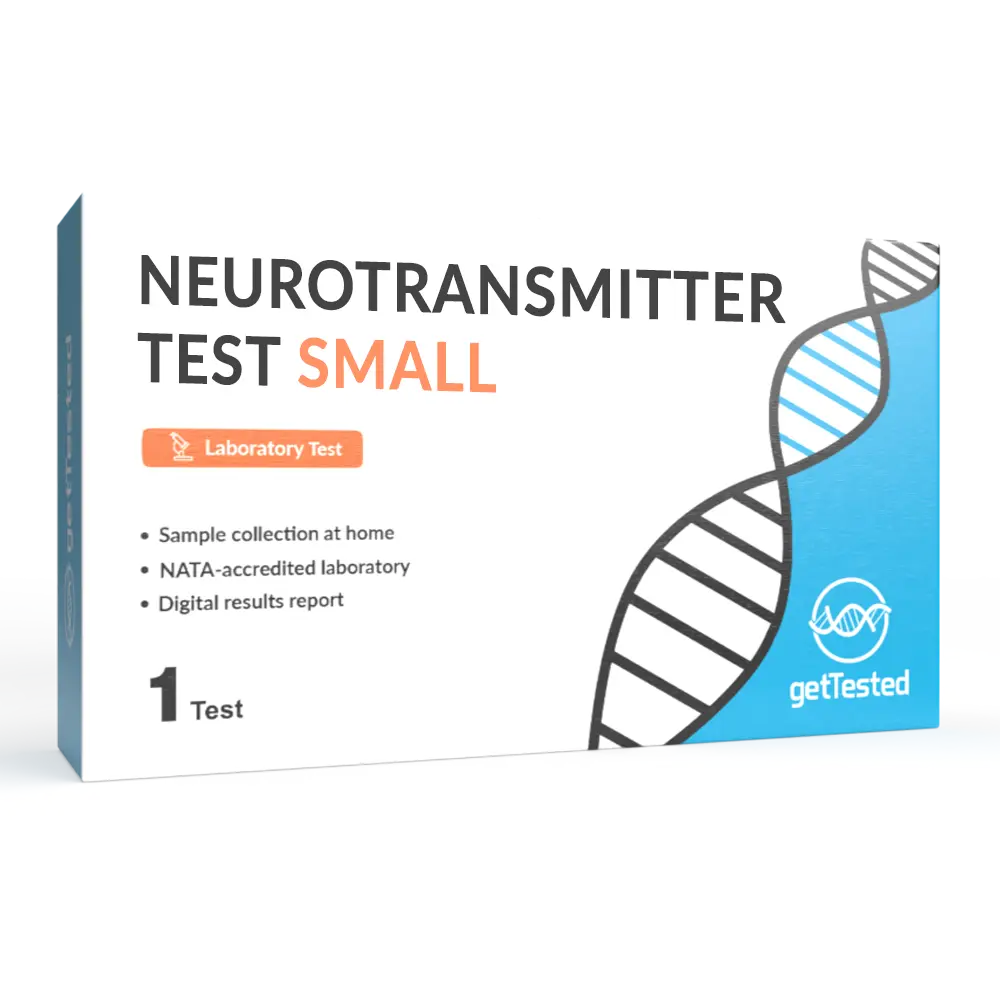
Explore your neurotransmitter levels at home. Urine test measuring serotonin, dopamine, GABA and glutamate, analysed in a NATA-accredited Australian lab.
Product details: AUD 599 — InStock — SKU 4026 — GetTested
About this test – Neurotransmitter Test (Small)
Why test your neurotransmitter levels?
Neurotransmitters regulate mood, stress response, sleep, and cognitive function, and imbalances may develop over time due to stress, lifestyle, or other factors.
This test may be relevant when exploring:
Low mood or lack of motivation
Stress or difficulty coping with stress
Sleep disturbances
Difficulty with focus or concentration
Feelings of restlessness or low resilience
How it works
Collect a urine sample at home
Send your sample to the laboratory using the prepaid return envelope
Your sample is analysed using validated laboratory methods
Receive your digital results within 14 days
You can also use our AI-based chat to help interpret your results.
Key information
Sample type: Urine
Turnaround time: 14 days from when the lab receives your sample
Results: Delivered digitally
Laboratory: Accredited laboratory
Shipping: Return shipping included
Accredited Laboratory
Your sample is analysed at a NATA-accredited laboratory in Australia, operating in accordance with ISO 15189 standards for medical testing. This ensures that all analyses are performed using validated methods and strict quality control procedures to provide accurate and reliable results.
Biomarkers included – Neurotransmitter Test (Small)
- GABA: Calming Neurotransmitters — GABA (gamma-aminobutyric acid) is the brain’s primary inhibitory neurotransmitter and helps regulate neuronal excitability by promoting calm signaling and preventing overstimulation. It counterbalances excitatory neurotransmitters such as glutamate and is involved in pathways related to stress regulation, sleep, mood, and muscle tone. Altered GABA signaling has been linked to conditions such as an
- Serotonin: Calming Neurotransmitters — Serotonin is a key neurotransmitter often called the “happiness chemical,” involved in regulating mood and emotional well-being. It also plays important roles in sleep, digestion, bone health, and blood clotting. Mainly produced in the gut, serotonin influences both the brain and body by affecting various physiological functions and emotional states. Imbalances in serotonin levels can have signifi
- Glutamate: Stimulating Neurotransmitters — Glutamate is a key excitatory neurotransmitter in the brain that plays a vital role in cognitive processes such as learning and memory. It is essential for brain development and synaptic plasticity. However, excessive glutamate levels can cause neuronal overstimulation, leading to potential neurotoxicity. This balance makes glutamate critical for normal brain function while also linking it to vari
- Dopamine: Dopamine and Adrenaline Pathway Markers — Dopamine is a key neurotransmitter that supports the brain’s reward and motivation systems. It plays essential roles in mood regulation, pleasure, focus, memory, and movement control. Imbalances in dopamine levels can affect mental well-being and are linked to conditions such as depression, anxiety, and Parkinson’s disease.
- Adrenaline: Dopamine and Adrenaline Pathway Markers — Adrenaline is a hormone and neurotransmitter released during stressful or threatening situations. It activates the body’s fight-or-flight response, increasing heart rate, blood pressure, and mental alertness. Elevated levels may reflect acute stress, while imbalances can affect how the body responds to pressure and external stimuli.
- Noradrenaline: Dopamine and Adrenaline Pathway Markers — Noradrenaline plays a central role in the body’s stress response and helps regulate alertness, focus, and blood pressure. It works closely with adrenaline and dopamine to support mental clarity and energy levels. Imbalances may affect concentration, stress tolerance, and overall nervous system activity.
- Noradrenaline/Adrenaline ratio: Neurotransmitter Balance Ratio — The noradrenaline/adrenaline (NA/A) ratio is a measure that reflects the balance between two key stress hormones — noradrenaline (norepinephrine) and adrenaline (epinephrine). Both play vital roles in the body’s fight-or-flight response, influencing heart rate, blood pressure, and energy mobilization. This ratio can shift in response to factors such as stress, physical activity, and overall health
- Creatinine: Urine Concentration Marker — Creatinine is a waste product formed in muscles from the normal breakdown of creatine. It is released into the bloodstream and filtered by the kidneys, then excreted in urine. Because creatinine levels are influenced by how efficiently the kidneys filter blood, it is commonly used to assess kidney function. Elevated creatinine may indicate reduced kidney filtration or kidney disease, while low lev
How to prepare – Neurotransmitter Test (Small)
Avoid bananas, walnuts, pineapples, tomatoes, and caffeine for 24 hours prior to sample collection. Collect the first morning urine sample before any food or drink.
Frequently asked questions – Neurotransmitter Test (Small)
Do I need to follow a special diet before the test?
For maximum accuracy, you should avoid bananas, walnuts, pineapples, tomatoes, and caffeinated beverages for 24 hours prior to collection, as these contain precursors that can artificially spike levels during your neurotransmitter test at home.
How accurate is a urine test for brain chemistry?
Urine testing measures the peripheral metabolites of neurotransmitters. While it does not measure 'brain levels' directly, these levels are highly correlated with systemic symptoms like burnout, gut issues, and adrenal fatigue, making it a powerful serotonin and dopamine test kit for functional health.
Will my antidepressants or supplements affect the results?
Yes, certain medications (like SSRIs) and supplements (like 5-HTP or L-Theanine) will influence results. It is generally recommended to maintain your normal routine unless otherwise advised by a healthcare provider, so the test reflects your current 'baseline' during your neurotransmitter test.
What does the adrenaline/noradrenaline ratio tell me?
The adrenaline noradrenaline ratio test specifically measures the conversion and balance of your primary stress hormones. A high or low ratio can indicate how your adrenal glands are responding to chronic stress and whether you are in a state of 'burnout.'
Customer reviews – Neurotransmitter Test (Small)
4.6/5 (5)
- 5/5 — Professional lab results that helped me understand some personal issues.
- 4/5 — Super interesting test! Waiting 14 days felt long but the data was worth it.
- 5/5 — The instructions were very clear and the kit arrived quickly.
- 5/5 — Easy way to check my levels from home.
- 4/5 — Great for biohackers wanting more data. The diet prep is a bit annoying though.