Mycotoxin Test
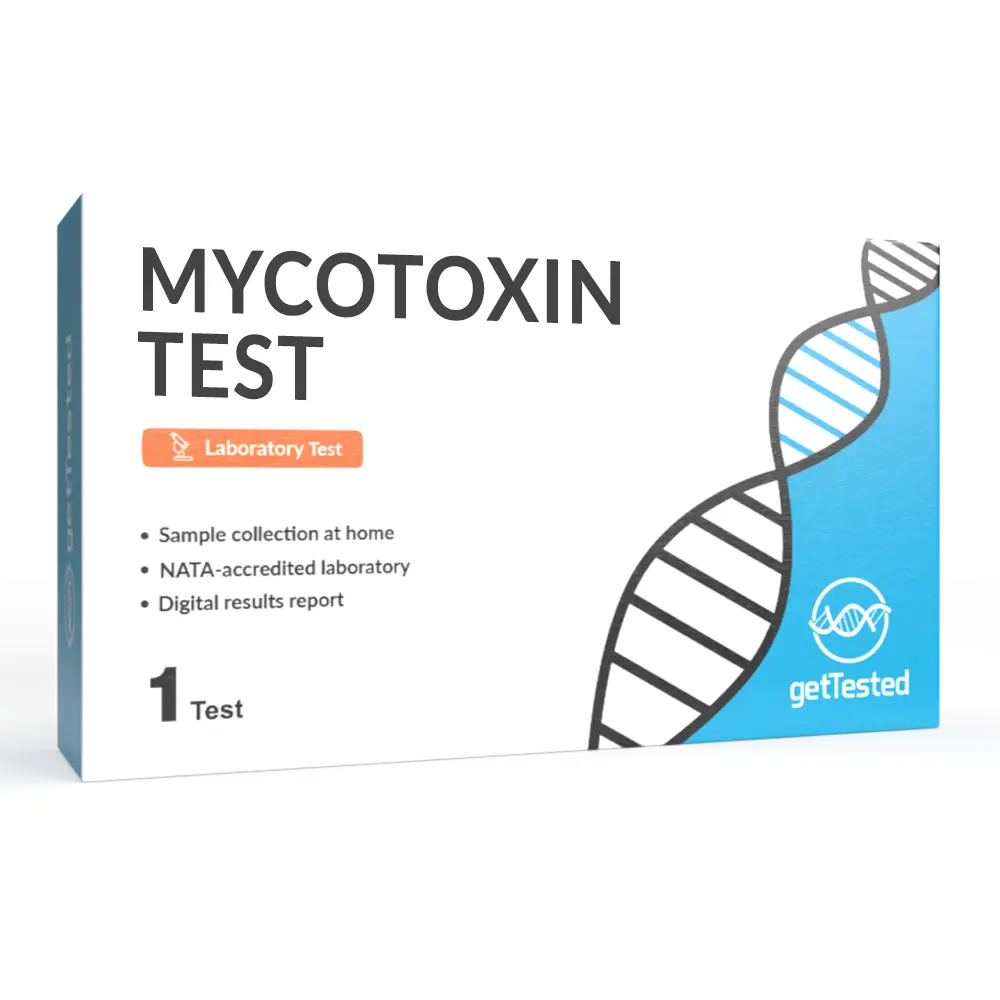
Concerned about mould exposure? At-home urine test measuring key mould-derived toxins including ochratoxin A and aflatoxins, in a NATA-accredited AU lab.
Product details: AUD 599 — InStock — SKU 3413 — GetTested
About this test – Mycotoxin Test
When is this test relevant?
Suspected mold exposure (e.g. home, workplace, or water-damaged environments)
Persistent symptoms such as fatigue or brain fog
Ongoing health concerns without a clear explanation
Sensitivity to indoor environments
As part of a broader evaluation of environmental exposures
How it works
Collect a urine sample at home
Send your sample to the laboratory using the prepaid return envelope
Your sample is analysed at a NATA-accredited laboratory in Australia, following ISO 15189 standards
Receive your digital results within 12–15 days
You can also use our AI-based chat to help interpret your results.
Key information
Sample type: Urine
Markers: Ochratoxin A, Aflatoxin group, Trichothecene group, Zearalenone, Gliotoxin
Turnaround time: 12–15 days from when the lab receives your sample
Results: Delivered digitally
Laboratory: NATA-accredited laboratory (ISO 15189)
Shipping: Return shipping included
Accredited Laboratory
Your sample is analysed at a NATA-accredited laboratory in Australia, operating in accordance with ISO 15189 standards for medical testing. This ensures that all analyses are performed using validated methods and strict quality control procedures.
Biomarkers included – Mycotoxin Test
- Ochratoxin A: Ochratoxins — Ochratoxin A is a mycotoxin produced by certain Aspergillus and Penicillium moulds. It may contaminate foods such as grains, coffee, dried fruit, wine and stored foods, with exposure most commonly occurring through diet. Ochratoxin A is often discussed in relation to kidney related stress, oxidative stress and toxin clearance. Higher levels may suggest increased exposure and should be understood t
- Aflatoxin B1 1: Aflatoxins — Aflatoxin B1 is a mycotoxin produced by certain moulds, especially Aspergillus species. It can contaminate foods such as grains, corn, nuts, peanuts and other stored crops, particularly when moisture and mould growth are present. Aflatoxin B1 is one of the most clinically relevant aflatoxins and is mainly discussed in relation to liver stress, oxidative stress and toxin processing. Higher levels m
- Aflatoxin G2: Aflatoxins — Aflatoxin G2 is a mycotoxin produced by certain Aspergillus moulds and may be found in food or crops affected by moisture and mould growth. It is usually assessed together with other aflatoxins, where it can act as a supporting marker of broader aflatoxin exposure. Higher levels may be relevant when several aflatoxin markers are present in the wider mycotoxin profile.
- Aflatoxin B2: Aflatoxins — Aflatoxin B2 is a mycotoxin produced by certain Aspergillus moulds and is often found together with other aflatoxins in contaminated foods or stored crops. It may occur in grains, corn, nuts, peanuts or other ingredients affected by moisture and mould growth. Aflatoxin B2 is generally assessed as part of the wider aflatoxin pattern, helping show whether exposure involves more than one aflatoxin ty
- Aflatoxin G1: Aflatoxins — Aflatoxin G1 is a mycotoxin produced by certain Aspergillus moulds that can contaminate foods such as grains, corn, nuts and stored crops. It belongs to the G type aflatoxins and can help show whether the aflatoxin exposure pattern includes more than the commonly discussed B type markers. Higher levels may suggest broader exposure to mould contaminated food or ingredients.
- Roridin L-2: Trichothecenes — Roridin L-2 is a macrocyclic trichothecene mycotoxin associated with mould growth in damp indoor environments and moisture damaged materials. It is often discussed in relation to immune related strain, meaning it may be relevant when mould toxin exposure appears to affect normal resilience, recovery and inflammatory balance. Higher levels may suggest exposure to trichothecene producing moulds.
- Roridin E: Trichothecenes — Roridin E is a macrocyclic trichothecene mycotoxin that may be produced by moulds associated with damp or water damaged environments. It is especially discussed in relation to disrupted cell activity, including how cells produce and use important proteins. Higher levels may suggest exposure to trichothecene producing moulds and should be understood together with the wider mycotoxin profile.
- Satratoxin G: Trichothecenes — Satratoxin G is a macrocyclic trichothecene mycotoxin that may be produced by moulds associated with water damaged buildings and damp indoor environments, especially Stachybotrys species. It is especially discussed in relation to broad cell stress, including how cells copy information and produce important proteins. Higher levels may suggest exposure to trichothecene producing moulds and can be re
- Roridin A: Trichothecenes — Roridin A is a macrocyclic trichothecene mycotoxin associated with certain moulds, including Stachybotrys species. It is often linked to water damaged indoor environments, damp materials and mould contaminated surroundings. Roridin A is one of the central roridin markers and is discussed in relation to cell stress, immune related strain and general wellbeing.
- Satratoxin H: Trichothecenes — Satratoxin H is a macrocyclic trichothecene mycotoxin associated with indoor mould exposure and moisture damaged materials, including moulds such as Stachybotrys species. It is often discussed in relation to reduced protein production in cells, which matters because proteins are needed for tissue repair, immune function, gut barrier maintenance, muscle function and recovery. Higher levels may sugg
- Isosatratoxin F: Trichothecenes — Isosatratoxin F is a macrocyclic trichothecene mycotoxin linked to moulds found in damp and water damaged environments. It is often discussed in relation to immune related strain, meaning it may be relevant when mould toxin exposure appears to affect normal resilience, inflammatory balance and recovery. Higher levels may suggest exposure to trichothecene producing moulds, especially when other tri
- Verrucarin A: Trichothecenes — Verrucarin A is a macrocyclic trichothecene mycotoxin that may be produced by moulds associated with damp or water damaged indoor environments, including Stachybotrys species. It is often discussed in relation to immune related effects and inflammatory balance. Higher levels may suggest exposure to trichothecene producing moulds and can be relevant when assessing mould related strain on resilience
- Verrucarin J: Trichothecenes — Verrucarin J is a macrocyclic trichothecene mycotoxin linked to mould exposure from water damaged buildings, damp materials or contaminated indoor environments. It is usually assessed as part of the wider trichothecene pattern rather than as an isolated marker. Higher levels may suggest broader exposure to verrucarin or trichothecene related mould toxins, especially when other trichothecene marker
- Roridin H: Trichothecenes — Roridin H is a macrocyclic trichothecene mycotoxin linked to mould exposure from damp or water damaged environments. It is especially discussed in relation to reduced protein production in cells. This matters because proteins are needed for normal tissue repair, immune function, gut barrier maintenance, muscle function and recovery.
- Gliotoxin Derivative: Gliotoxins — Gliotoxin Derivative is a marker related to gliotoxin, a mycotoxin that can be produced by certain moulds, especially Aspergillus species. Because it reflects a gliotoxin related compound rather than only the original toxin itself, it can help indicate possible exposure to gliotoxin producing moulds. Gliotoxin related findings are often discussed in relation to immune function, inflammatory balanc
- Zearalenone: Zearalenone — Zearalenone is a mycotoxin produced by Fusarium molds that commonly contaminate grains and cereals. It is known for its estrogen-like activity and is often monitored in food safety testing.
How to prepare – Mycotoxin Test
It is recommended to avoid eating blue cheese or fermented foods for 24 hours prior to sample collection.
Frequently asked questions – Mycotoxin Test
How accurate is an at-home urine test compared to a blood test?
While blood tests measure toxins currently circulating in your blood, this urine test for mold exposure measures 'body burden'—the toxins your body is actively processing and excreting. For chronic exposure, urine testing is often considered more representative of the total toxic load stored in tissues.
What is the difference between an environmental mold test and a human mycotoxin test?
An environmental test (like ERMI) measures mold in your building. This mold toxicity test human recognizes what has actually entered your biological system. It is possible to have mold in your home that has not yet affected your body, or to carry a toxic load from a previous exposure that no longer exists in your current environment.
What symptoms suggest I need an Ochratoxin A test?
Ochratoxin A test symptoms can include chronic fatigue, brain fog, sinus congestion, kidney issues, and unexplained neurological symptoms. If you have been in a water-damaged building and experience these, this test can help confirm exposure.
Why is Gliotoxin included in the screen?
This test measures the markers of gliotoxin exposure human subjects show when facing mold or fungal overgrowth. Unlike some other toxins, high Gliotoxin can also indicate a Candida overgrowth in the gut, making it a vital marker for both environmental and internal health.
Customer reviews – Mycotoxin Test
4.6/5 (5)
- 4/5 — Results took about two weeks to arrive. Very helpful for tracking my detox progress.
- 5/5 — Professional grade kit and the shipping was fast.
- 5/5 — Super easy process and the instructions were very clear.
- 4/5 — Good test, just make sure you plan ahead for the morning collection.
- 5/5 — Finally got some answers about my brain fog.